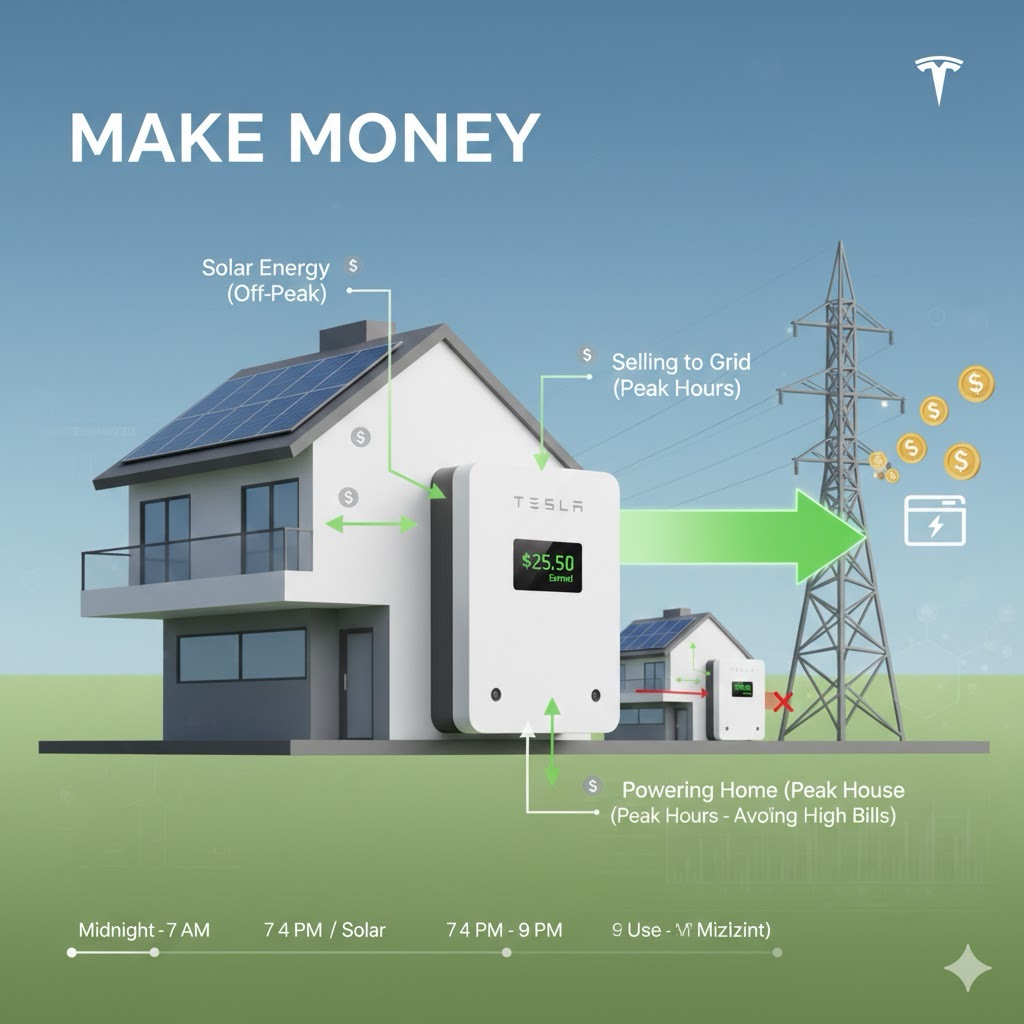
A home battery like the Tesla, Inc. Powerwall lowers electric bills on a Time-of-Use (TOU) plan by shifting when you use grid electricity.
⚡ How TOU Pricing Works
Utilities charge different rates depending on time of day:
- 🟢 Off-peak (cheap): Night / early morning
- 🟡 Mid-peak: Shoulder hours
- 🔴 Peak (expensive): Late afternoon / evening
Without a battery, you pay peak prices when your home uses the most power.
🔋 How a Powerwall Saves Money
1) Energy Arbitrage (Buy Low, Use High)
The battery charges when electricity is cheap and powers your home when it’s expensive.
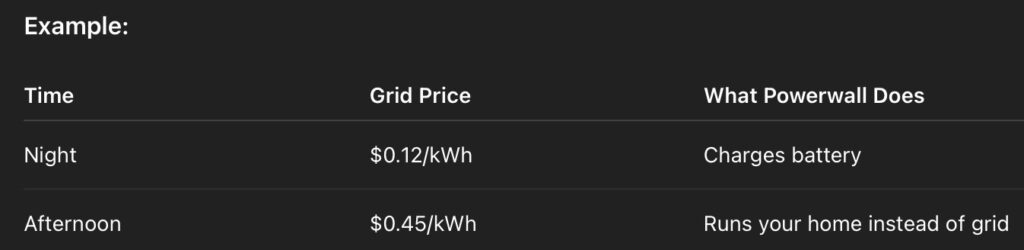
➡️ You avoid buying expensive peak electricity.
2) Solar Energy Shifting (If You Have Solar)
Solar often produces midday, but peak pricing is later.
Without battery:
☀️ Extra solar exported cheaply to grid
🌇 You buy expensive evening power
With battery:
☀️ Store daytime solar
🌙 Use it during peak pricing
3) Peak Demand Reduction (Some Utilities)
Some TOU plans also include demand charges.
Powerwall can:
- Smooth sudden spikes (AC + oven + EV charging)
- Lower your monthly peak usage
- Reduce demand fees
4) Backup Power = Hidden Savings
Not directly TOU, but outages can cause costs:
- Food spoilage avoided
- No hotel stays
- Keep working from home
🧠 Smart Control (Automatic)
The system learns your rate schedule and usage, then optimizes daily:
- Charges before peak starts
- Discharges during expensive hours
- Keeps reserve for outages (if configured)
💰 Real-World Savings Potential
Savings depend on:
- Size of peak/off-peak price difference
- Your evening energy use
- Whether you have solar
- Utility rules
Typical outcomes:
- Moderate TOU gap: Small savings
- Large TOU gap (e.g., California): Significant savings
- Solar + battery: Often highest savings
📉 Simple California-Style Example
Daily usage during peak: 20 kWh
Peak price: $0.50/kWh
Off-peak price: $0.15/kWh
Without battery:
➡️ 20 × $0.50 = $10/day
With battery:
➡️ Charge at $0.15 → 20 × $0.15 = $3/day
💰 Savings ≈ $7/day (~$210/month)